
What is SEO and How It Works
Alright, let’s break down SEO in plain English, minus the techy mumbo-jumbo. SEO? It stands for “Search Engine Optimization,” but honestly, it’s just a fancy way of saying “make Google like your website.” You’re basically trying to get your website to show up higher when people search for stuff—because let’s be real, nobody clicks past page one. If your site is buried on page five, you might as well be invisible.
So, what’s the point of all this SEO jazz? First off, you want people to actually find your website without having to pay for ads. This is what folks call “organic traffic.” It’s like getting foot traffic to your shop just because you’ve got a killer sign, not because you paid someone to stand on the corner and wave people in.
On top of that, SEO is about making your site easy and pleasant to use. Google’s kind of obsessed with user experience these days, so if your site is a hot mess, forget about ranking. Fast load times, clear info, mobile-friendly—yeah, it all matters.
Why bother? Well, the internet’s basically a never-ending shouting match, and SEO is your megaphone. If you want your stuff seen and not just floating around in the digital void, you gotta play the SEO game. Otherwise, you’re just whispering into the void while everyone else is blasting air horns.

Why Do We Need SEO?
🔟 Top Reasons SEO Actually Matters (No Fluff, Just Facts)
🌟 Get Noticed (Seriously) Let’s be real—nobody’s scrolling to page two of Google unless they’re desperate. If you wanna be seen, you gotta be up top. SEO’s your ticket.
📈 Traffic That Doesn’t Suck Your Budget Dry Ads? Yeah, they’ll eat your wallet alive. SEO keeps traffic rolling in, and your bank account stays happy.
🧠 Trust Level: Unlocked If Google says you’re cool, people just… believe it. It’s like street cred, but for websites.
📱 User Experience That Doesn’t Suck Fast load? Looks good on your phone? Easy to click around? SEO basically forces you to fix your site, so people don’t bounce in two seconds.
🎯 Stop Yelling Into the Void With SEO, you’re getting in front of folks who are already hunting for what you offer. No awkward cold emails or pitching to people who don’t care.
💰 Investment That Pays Off for Ages One good SEO push and your site can work overtime. Unlike ads, you’re not stuck paying every month just to stay visible.
📊 Real Results, Not Just Vibes Google Analytics isn’t just for nerds. It tells you what’s working, what’s tanking, and where to double down.
🔄 Content That Actually Gets Eyeballs Writing blog posts that no one reads? Brutal. SEO helps your content actually show up somewhere besides your mom’s bookmarks.
🌍 Leveling the Playing Field You don’t need VC money to beat the big dogs—smart SEO can put a tiny shop on top, especially in local searches.
📦 Clicks = Cash (Or Signups, Or Whatever You Want) More eyes on your site means more people doing what you want—buying, signing up, or just sticking around. That’s the whole game, right?
🔄 SEO: Not Just a One-Night Stand
Look, SEO isn’t a “set it and forget it” kinda deal. Google changes the rules all the time and your competition isn’t sleeping either. So yeah, keep updating your stuff, chase new keywords, fix broken links, and make sure your site doesn’t load slower than dial-up. That’s how you stay in the game.
And that’s the real story. No fluff. Just facts.
Difference between SEO , SEM AND PPC
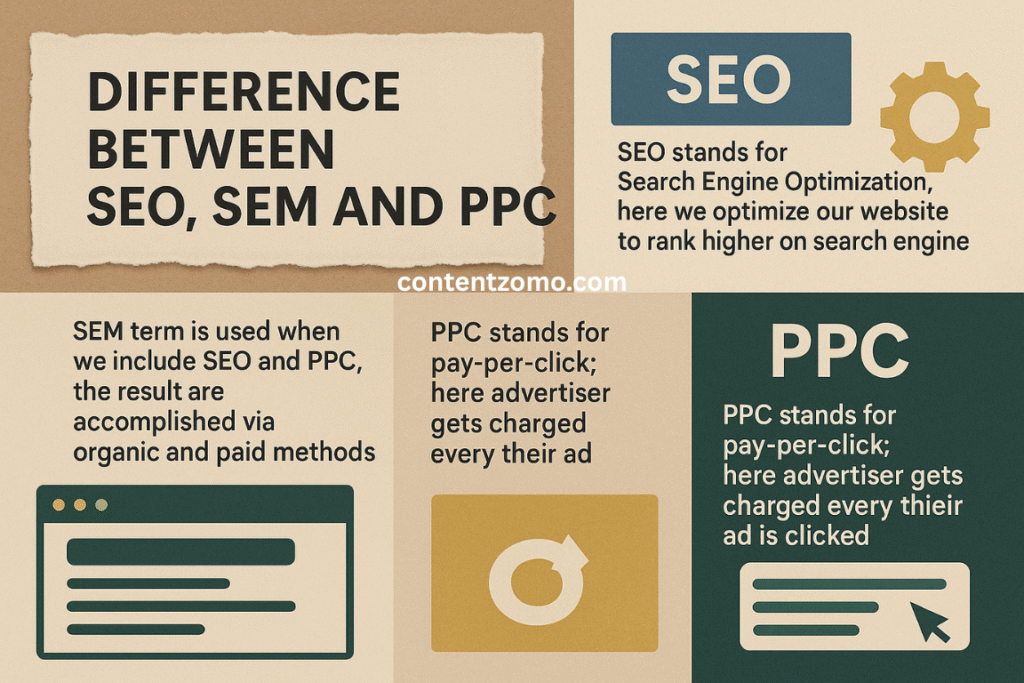
SEM stands for search engine marketing or in a simple way we can say search marketing.
PPC stands for pay-per-click; here advertiser gets charged every their ad is clicked, we bit on certain keywords and phrases
SEO stands for Search Engine Optimization, here we optimize our website to rank higher on search engine.
- SEO: Organic results clicks from search engines.
- SEM: Organic and Paid results clicks from search engines.
- PPC: Paid results clicks from search engines
SEM term is used when we include SEO and PPC, the result are accomplished via organic and paid methods.
How Search Engines Work
Alright, let’s peel back the curtain on search engines for a minute. If you’re messing with SEO and you don’t get how Google (and its buddies Bing, Yahoo, etc.) actually works, you’re basically driving blindfolded. The big mission here? Point people toward the best, most useful stuff on the internet when they type something in the search box. Sounds easy, but wow, it’s a whole circus behind the scenes—crawling, indexing, ranking, the works.
The Basics of Search Engine Functionality
Purpose of Search Engines
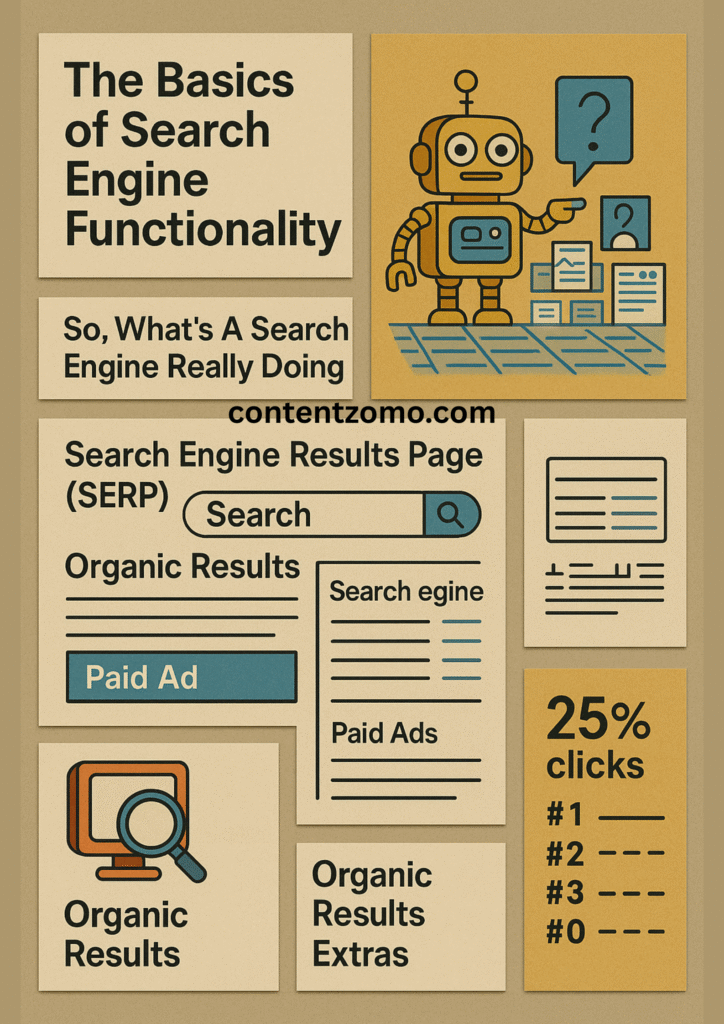
So, What’s A Search Engine Really Doing? Why do search engines exist? To answer your questions, recommend the perfect pizza joint, or settle a bar bet in five seconds flat. That’s it. They want to spit out answers that are spot-on, trustworthy, and quick—because nobody’s got time to dig through the internet’s attic.
To pull this off, search engines send out little robot minions (okay, “bots” or “spiders,” but “robot minions” is more fun) to snoop around every website. Plus, they’ve got fancy algorithms that try to guess what you want, even if you barely know yourself. If your site lines up with what the user’s looking for, congrats—you might just pop up on that first results page.
Search Engine Results Page (SERP)
The SERP (That’s “Search Engine Results Page,” FYI) You type stuff in. You hit enter. Bam—the SERP pops up. This is Google’s big show.
Here’s what you’ll see:
- Organic Results: The stuff Google thinks you want (no payment involved)
- Paid Ads: Someone shelled out cash to be up top
- All the extras: Featured snippets, those “People Also Ask” dropdowns, knowledge panels—Google loves tossing in bells and whistles.
Getting into the top three? That’s the VIP section. First spot grabs something like 25% of all clicks. By the time you get to #10? Yeah, you’re down to scraps.
👀 How People Actually Use Search Most folks?
They don’t scroll past page one. They barely glance at anything that looks sketchy or slow. The first thing that looks legit gets the click, and they’re outta there. That’s why you need killer meta titles and descriptions—or you’re invisible.
The Process of Crawling and Indexing
For a page to show up in searches, Google’s gotta know it exists. —this happens through crawling and indexing.
Crawling
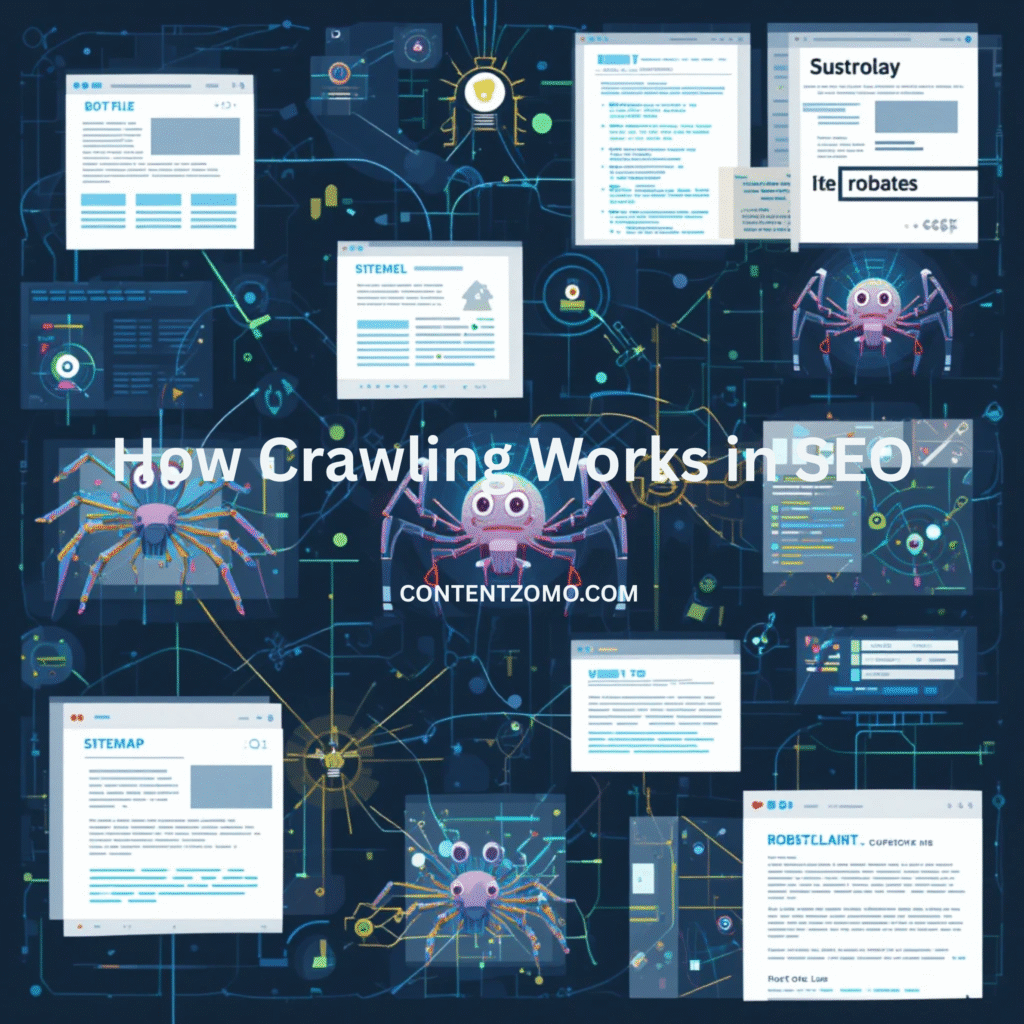
🤖 Crawling Bots wander the web 24/7, following links, poking around, grabbing what they find. They check out:
- How your page is set up
- What kind of content you’ve got
- Where all your links go (in and out)
If you’ve got a sitemap, good. If not, bots might still find you, but don’t make it hard. Also, robots.txt and link authority matter—a lot.
Indexing
Indexing After crawling, search engines toss all that info into a massive digital filing cabinet—the index. Every page gets tagged, sorted, shoved into a category. But hey, not everything makes the cut. If your page is a copycat, low quality, blocked by robots.txt, or tagged with noindex? Sorry, you’re benched.
So, what speeds things up?
- Solid site structure and some internet street cred
- Fresh content—Google loves new stuff
- Clean, simple URLs (nobody wants to index www.yoursite.com/123abc?=weirdstuff)
Ranking Algorithms
The Secret Sauce Once your stuff’s in the index, it’s time for the big question: Where do you land in the results? Google’s algorithm is basically a giant, hyperactive judge—always tweaking, always judging.
📊 How’s Ranking Decided? They stack your site up against hundreds of factors. It’s a popularity contest mixed with a talent show.
Here’s what matters most:
- Content quality. Obvious, right? If it’s boring or copy-pasted, forget it.
- Backlinks from respected sites (think of these as internet endorsements)
- Mobile-friendliness. If your site’s a pain on a phone, you’re toast.
- Speed. Slow sites? Bye.
- Security. HTTPS gives you a leg up (especially if you’re selling stuff).
- User engagement. If people click, stick around, and don’t bounce, Google notices.
🔄 Oh, and Algorithm Updates?
They Never Stop Google’s always rolling out tweaks—some small, some earth-shaking (Panda, Penguin, Hummingbird, and the more recent “Helpful Content” update, which, honestly, sounds like a passive-aggressive note from a roommate). If you’re not paying attention, you’re falling behind.
Wrapping Up Search engines are complicated, but the basics aren’t rocket science: make good stuff, keep your site clean and speedy, and pay attention to what’s changing in SEO land. Keep learning, keep tweaking, and don’t sleep on the latest updates—because Google sure doesn’t. If you can wrap your head around how crawling, indexing, and ranking work, you’re already ahead of half your competition.